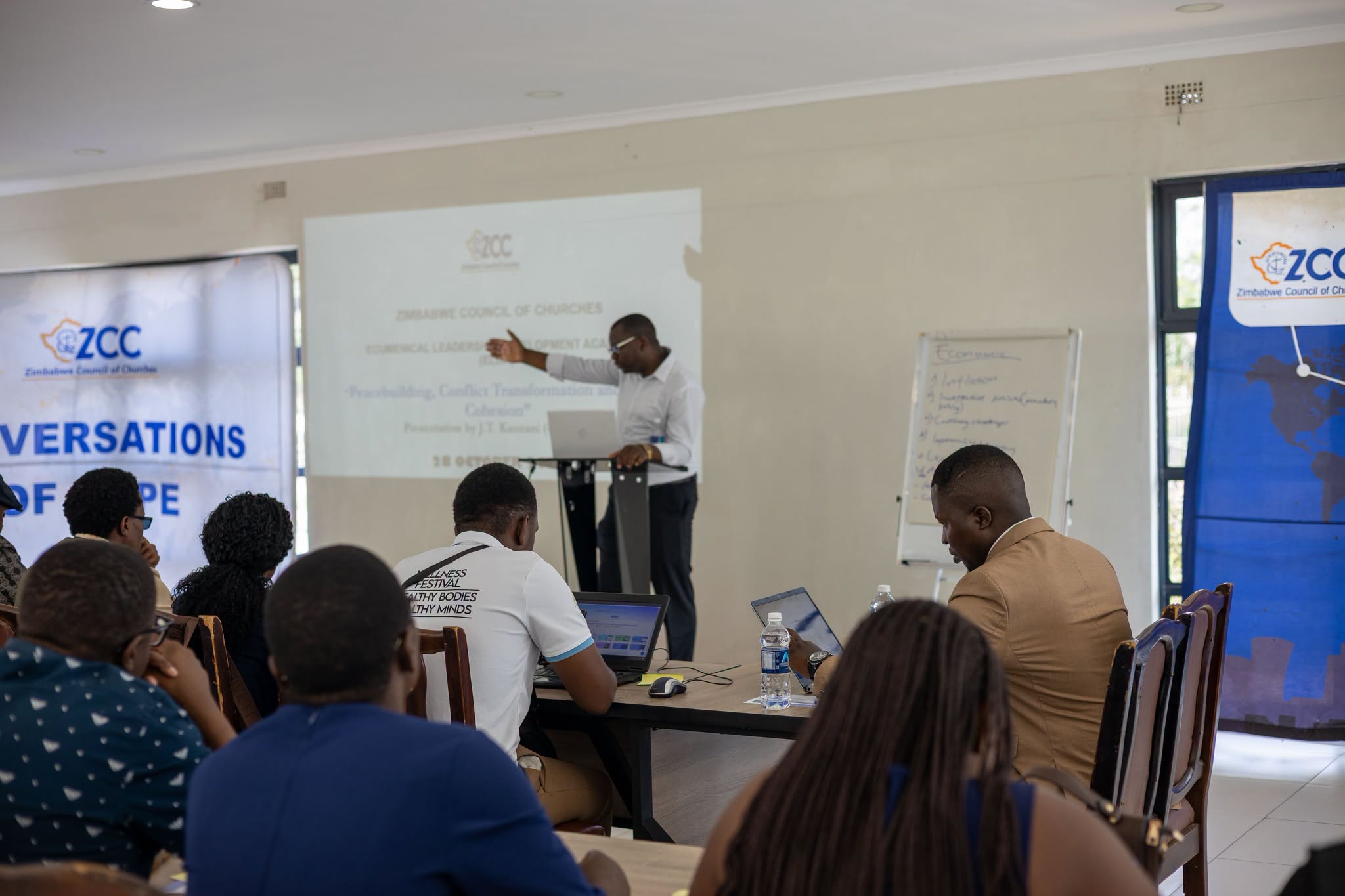
In early November 2026, emerging faith leaders arrived in Harare for the in residence phase of the Ecumenical Leadership Development Academy, hosted by the Zimbabwe Council of Churches (ZCC). The program brought together young theologians, lay organizers and clergy from different denominations across the country. The goal was to connect spiritual devotion with practical community work.
Instead of relying only on classroom lectures, the academy used collaborative workshops focused on ethical governance, peacebuilding and social justice. Guided by Isaiah 1:17 “Learn to do right; seek justice. Defend the oppressed” attendees looked at how local congregations can respond to economic and social challenges in their neighborhoods.
Mornings began with shared interdenominational devotionals and prayer. That built camaraderie among participants who might otherwise worship miles and traditions apart. By afternoon, those reflections turned into hands on strategy sessions. Participants drafted community outreach plans, worked through conflict resolution case studies and explored practical ways to amplify the voices of vulnerable people, including women and youth, within church decision making structures.
During a closing plenary session, facilitators said true ecumenical unity happens when churches move beyond shared pews to shared purpose. That echoed the ZCC commitment to nurturing resilient, socially conscious church leadership that can serve both spiritual and civic needs.
As the in residence phase ended, participants left not just with certificates, but with renewed peer networks and concrete local action plans for their home parishes. By investing in the next generation of servant leaders, the Zimbabwe Council of Churches showed that when faith communities unite around justice and compassion their impact reaches far beyond Sunday morning.