As Tariro Moyo (not her real name) sat down in her sitting room, her thoughts had been flashing to her high- pressure working environment which gives her no time to rest, 24 other supplies to give to her shops. As she sitting down, she reminisces her past life, just at 16, she had a child, without being able to secure a man, who she could really call her own. Her own regret, a blessing in form of her only baby boy.
Just at 16, she chuckles. Taking out her phone, to check out her social media platforms has become her demons and angry shouts, which torments her soul. She was just a child but the negative comments, she sees on “single mothers, ” pains her. She never hoped that one day, someone who she considered the love of her life, would leave her. Life has a funny way of threading, she says to her workmates.
All the comments, posts and images she sees, pains her only and all other women who are in the same predicament. One post, one comment kills her hopes and future of finding a new lover. The abuse she faces digitally, kills her. The blurred mirror, she says, the only seen part is hers, waking up and checking in at her workplace.
The question hangs in the balance, what about other people like Tariro, who are in a much worser place, girls and women who have no form of employment, and their entertainment comes through their social media platforms, how would they perceive the media. However, in the same digital space, the
Anglican church has voiced out against the same motion, ” Digital Gender Based Violence (DGBV), Blurry
Mirrors (not realizing what one would feel after that comment or post.)
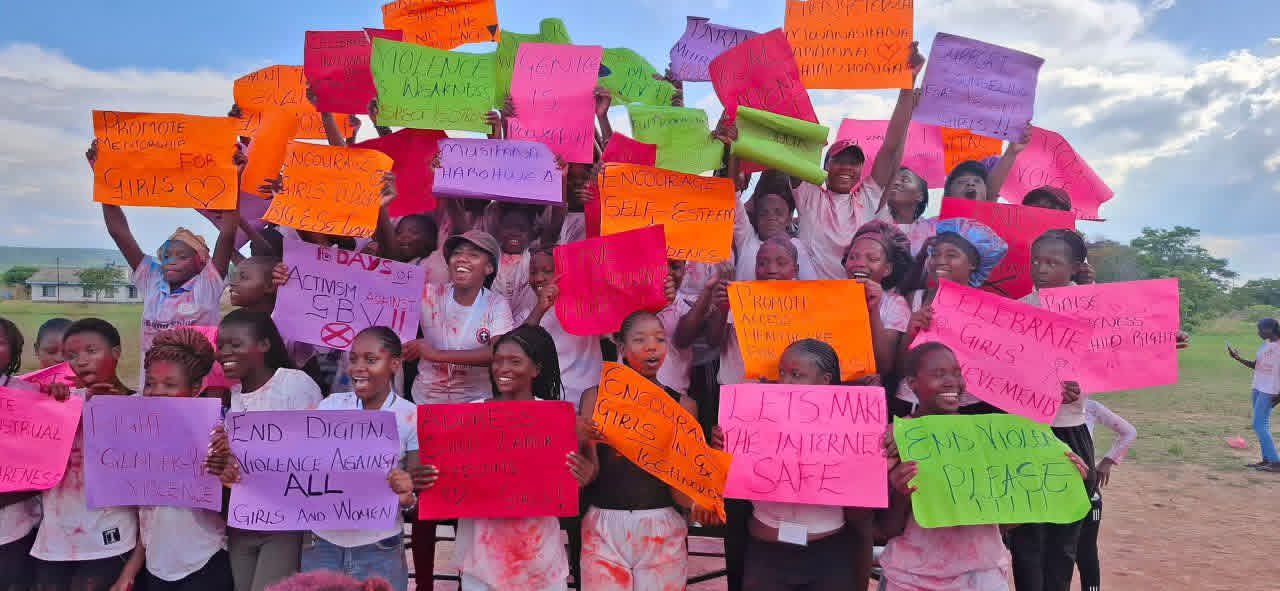
With the world witnessing more technology advancement, gender violences have risen 10 times more as the global community has failed to remove the sharp teeth of people who misuses the social media platforms. During the 16 days of activism, the church has taken a different light in fighting against GBV. Under the theme, ” united to end digital gender-based violence towards all women and girls. “
In a video uploaded on the Anglican Diocese Facebook page, the Anglican Youth Association of Harare- Secretary General, Miah Charlayne Tsinakwadi says that this year, the church has shifted its ordinary 16 days of activism, to digital space where women are facing all kinds of abuse. With the church rising its banner from the Bible scripture, ” Man was created in the likeness of God, ” resembling that whether we are male or female, we are all equal in the eyes of the Maker, and we have the same share of love, peace and joy in the kingdom of Heaven.
” Digital violence has a lot of consequences on women. ” The impact of digital abuse is clearly seen as it affects the women’s confidence, removes them from public engagement, leads to cyber harassment, where women are not able to share their experiences and thoughts on life.
As the nation is brought to picture, the secretary has urged the nationals to be United because this is not the issue which affects all the communities. ” For we need to join hands and fight against digital abuse towards all women and girls. United, we stand and divided, we fall, ” she said.
Digital gender-based abuse, or technology-facilitated gender-based violence (TFGBV), is any act of violence committed, assisted, or amplified by the use of information and communication technologies or digital media against a person on the basis of their gender. It has no limits or geographical boundaries. It can even start online and escalate to physical spaces, or vice-versa, creating a dangerous continuum of online-offline abuse that can end in the most extreme forms of violence, including femicide.
Rumbidzai Judith Marango, St. Veronica member says the improper use of the social media platforms and technological advancement tools is also leading to harmful effects including digital violences.
” Let’s mind what we post. In search of likes and views, some of the posts are killing women and girls. There is lot of body shaming, some are going through a lot, but some comments, posts and share we post affects them, ” the St. Veronica member has said.
With a lot of obscene videos and images being posted on social media, the world has taken a different turn. Was it a good turn? It is a question, one has to ask themselves, before they comment, post or share. It is with a sad note, that women like Tariro and other women who are much far worser situations, are going through a lot of abuses digitally. It is a mirror; one has to take a look at.
Commenting on the 16 days of activism by the church, Chaplin of the Social Action Program in the Harare Diocese, Reverend Father said the diocese saw the need to raise awareness against digital gender-based violence which has affected the global village as social media platforms has become a bedrock of social indecency.
” As a diocese, we seek to raise awareness of GBV. To speak against violence and to promote preventive action. We know there are traditional forms of violence which are economic, physical, silence itself, social and emotional, but this year we are looking at digital violence which looks at image-based violence, cyberbullying, publishing of private information, online stocking, ” the reverend said.
Social media has to be used in a positive way and it can be used to educate people, raise awareness, rather than digitally abusing women and girls.
” We say no to digital gender-based violence, ” he said.