• Cart
  • Checkout
  • Donate
  • Home
  • My account
  • Podcasts
  • Privacy Policy
  • Shop
  • UPLOAD YOUR SONGS & VIDEOS
Saturday, July 18, 2026
  • Login
ZimGospel Masters
  • Home
  • Daily Devotion
  • News
  • Business
  • Lifestyle
  • Sport
  • Radio
  • Shop
  • Our Radio Programmes
  • Podcasts
No Result
View All Result
  • Home
  • Daily Devotion
  • News
  • Business
  • Lifestyle
  • Sport
  • Radio
  • Shop
  • Our Radio Programmes
  • Podcasts
No Result
View All Result
ZimGospel Masters
No Result
View All Result
Home News Universal

When They Come Back, Will We Receive Them?

ZimGospel Masters by ZimGospel Masters
May 28, 2026
in Universal
0
When They Come Back, Will We Receive Them?
Share on FacebookShare on Twitter

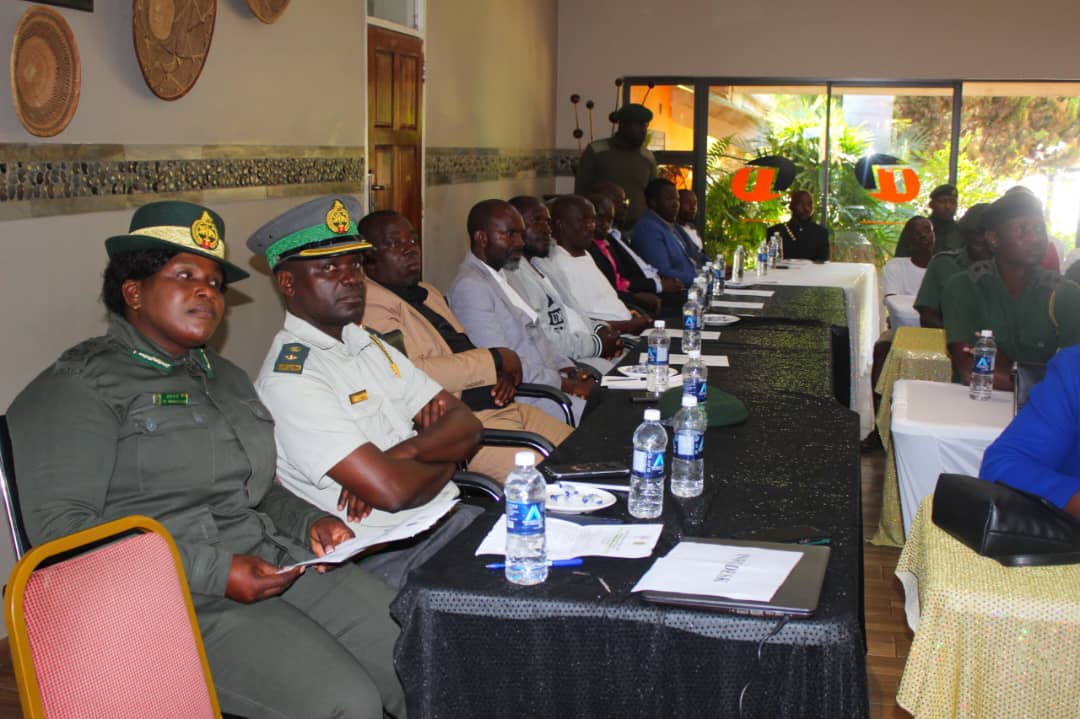
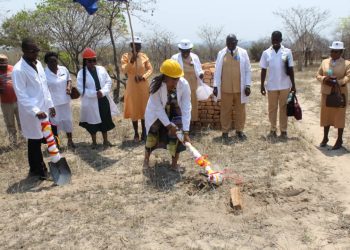
BINDURA- At Twin Lodge on 26 May 2026, a workshop convened by the Pathways to Reintegration Foundation (PAREF), under the auspices of the Zimbabwe Prisons and Correctional Service, did something few policy gatherings dare to do. It stripped away institutional comfort and confronted the nation with a question that does not yield to polite avoidance: When the prison gate opens, will we receive them?

The gathering drew an unusually broad coalition—traditional leaders, academics, clergy, media practitioners, captains of industry, government officials, and students. It was not simply a meeting of stakeholders. It was a convergence of influence, conscience, and lived experience, assembled around a problem Zimbabwe has long acknowledged but rarely faced with such clarity.

PAREF itself was not introduced as another programme seeking implementation. It was framed, deliberately, as a promise. A promise to strengthen rehabilitation, expand skills development, and restore pathways for those transitioning from incarceration back into society. Established by the Zimbabwe Prisons and Correctional Service, the initiative seeks to confront the enduring barriers to reintegration—stigma, limited resources, and policy fragmentation.

Its approach is both practical and ambitious: vocational training, education, mental health support, job placement, and the development of community-based correctional centres. In essence, it is an attempt to build a bridge where, for too long, there has only been a gap.

But promises—however well articulated—collapse under the weight of societal indifference.

At the centre of this conversation lies a moment so ordinary it is often ignored. The uniform comes off. The sentence ends. A human being walks out. No longer an inmate. No longer a file. Just a person returning.

That is where reintegration begins.

And that is where society most often fails.

Zimbabwe, like many nations, has developed systems that are efficient at sending people away. Far less thought has been given to bringing them back. Individuals are released into communities that remember their worst decisions but resist acknowledging their capacity for change. We demand rehabilitation within prison walls, yet deny opportunity beyond them. We speak fluently about correction, but act decisively in exclusion.

The result is a paradox: a freedom that feels heavier than confinement.

The gate opens—but acceptance does not. A man returns home to familiar roads that no longer recognise him. A child observes from a distance, uncertain whether the figure before them is a father restored or a stranger shaped by absence. This is punishment without bars—quiet, persistent, and profoundly damaging.

What distinguished the Bindura workshop was its refusal to dilute responsibility.

Reintegration, it made clear, is not the burden of one institution.

The Prisons and Correctional Service must prepare individuals not only for release, but for return. The Judiciary must create space for restoration alongside punishment. Law enforcement must be able to recognise transformation where it exists. The Church must embody the forgiveness it proclaims. Traditional leaders must re-anchor identity and belonging. The private sector must move beyond risk aversion and create opportunity. And the community—the ultimate gatekeeper—must choose whether to include or exclude.

Because the consequences are not theoretical.

Across Zimbabwe, there are empty spaces at family tables—not because they cannot be filled, but because return has been quietly resisted. There are mothers carrying grief without language. There are men and women waking each day, attempting to rebuild lives in environments that measure them solely against their past.

PAREF will not be judged by the success of a single workshop in Bindura. Its true measure will emerge in quieter, more decisive moments: when trust is extended where suspicion once prevailed; when opportunity replaces hesitation; when belonging is restored without qualification.

That is when reintegration ceases to be rhetoric and becomes reality.

The question raised at Twin Lodge does not end with the closing session. It travels—with unsettling persistence—into homes, boardrooms, churches, and corridors of power: When they come back, will we receive them?

Because if the answer is no, then Zimbabwe must confront a difficult truth.

Prison does not end at the gate.

It extends into communities.

It settles into attitudes.

It hardens in silence.

It becomes a sentence society continues to enforce long after the courts have spoken.

And in that extension of punishment, something deeper is revealed: the failure to reintegrate is not a failure of those who return, but of those who refuse to receive.

A nation that cannot reopen its doors cannot fully claim freedom.

A society that withholds belonging reshapes justice into exclusion.

In the end, the legacy of the Pathways to Reintegration Foundation will not be defined by frameworks or declarations, but by a collective decision—whether Zimbabwe is willing to replace memory with mercy, suspicion with trust, and distance with dignity.

Because when they come back, and we still turn them away—
it is not they who remain imprisoned.
It is us.

RelatedPosts

The Salvation Army youths raise hope and funds for Madagascar Mission at glittering dinner

Pope’s lunch with the poor: fragility as a source of strength for communities

ZCC Intensifies Support For Zimbabwean Returnees From South Africa

ZCC Hands Over Mothers’ Shelter in Chimanimani in Faith in Action Gesture

Previous Post

High office bowing to a higher office

Next Post

Heavenly Harmony Choir Launches with ‘Pursuing Horizons’ Concert

ZimGospel Masters

ZimGospel Masters

Related Posts

The Salvation Army youths raise hope and funds for Madagascar Mission at glittering dinner
Universal

The Salvation Army youths raise hope and funds for Madagascar Mission at glittering dinner

July 14, 2026
Pope’s lunch with the poor: fragility as a source of strength for communities
Universal

Pope’s lunch with the poor: fragility as a source of strength for communities

July 14, 2026
ZCC Intensifies Support For Zimbabwean Returnees From South Africa
Universal

ZCC Intensifies Support For Zimbabwean Returnees From South Africa

July 14, 2026
ZCC Hands Over Mothers’ Shelter in Chimanimani in Faith in Action Gesture
Universal

ZCC Hands Over Mothers’ Shelter in Chimanimani in Faith in Action Gesture

July 13, 2026
Universal

ZCC’s Response to Xenophobia

July 7, 2026
Xenophobia in South Africa is an attack on the image of God.
Universal

Xenophobia in South Africa is an attack on the image of God.

July 3, 2026
Load More
Next Post
Heavenly Harmony Choir Launches with ‘Pursuing Horizons’ Concert

Heavenly Harmony Choir Launches with ‘Pursuing Horizons’ Concert

Is Mothers’ Day celebration biblical?

Is Mothers’ Day celebration biblical?

Leave a Reply Cancel reply

Your email address will not be published. Required fields are marked *

I agree to the Terms & Conditions and Privacy Policy.

Most Popular

The Salvation Army youths raise hope and funds for Madagascar Mission at glittering dinner
Universal

The Salvation Army youths raise hope and funds for Madagascar Mission at glittering dinner

July 14, 2026
Pope’s lunch with the poor: fragility as a source of strength for communities
Universal

Pope’s lunch with the poor: fragility as a source of strength for communities

July 14, 2026
ZCC Intensifies Support For Zimbabwean Returnees From South Africa
Universal

ZCC Intensifies Support For Zimbabwean Returnees From South Africa

July 14, 2026
  • Trending
  • Comments
  • Latest
Renowned Preacher Reverend Ellison Kamupira Honoured with State-Assisted Funeral

Ministry Announces Release of April/May 2024 HEXCO Examination Results

May 14, 2024
Bishop Madawo re-elected AFM in Zimbabwe President

Bishop Madawo re-elected AFM in Zimbabwe President

August 14, 2024
Joyce Meyer Opens Food Factory in Zimbabwe to Feed Over 50,000 Children Daily

Joyce Meyer Opens Food Factory in Zimbabwe to Feed Over 50,000 Children Daily

June 7, 2024
New Heaven and New Earth Church 3rd 100, 000 graduation photo exhibition registers a success.

New Heaven and New Earth Church 3rd 100, 000 graduation photo exhibition registers a success.

November 21, 2023
The Biblical Principle for Wealth Creation.

The Biblical Principle for Wealth Creation.

2
Gospel singer releases a new video for Zimbabwe

Gospel singer releases a new video for Zimbabwe

1
Gospel concert set for upcoming artists

Gospel concert set for upcoming artists

1
New Heaven and New Earth Church 3rd 100, 000 graduation photo exhibition registers a success.

New Heaven and New Earth Church 3rd 100, 000 graduation photo exhibition registers a success.

1
The Salvation Army youths raise hope and funds for Madagascar Mission at glittering dinner

The Salvation Army youths raise hope and funds for Madagascar Mission at glittering dinner

July 14, 2026
Pope’s lunch with the poor: fragility as a source of strength for communities

Pope’s lunch with the poor: fragility as a source of strength for communities

July 14, 2026
ZCC Intensifies Support For Zimbabwean Returnees From South Africa

ZCC Intensifies Support For Zimbabwean Returnees From South Africa

July 14, 2026
ZCC Hands Over Mothers’ Shelter in Chimanimani in Faith in Action Gesture

ZCC Hands Over Mothers’ Shelter in Chimanimani in Faith in Action Gesture

July 13, 2026

Find us on Facebook

  • About Us
  • Advertise With Us
  • Privacy, Policy and Terms and Conditions
  • Contact Us
Call us: +263 242 793 901

© 2023 ZimGospel Masters | Web Design by Hantec Solutions

No Result
View All Result
  • Home
  • Daily Devotion
  • News
  • Business
  • Lifestyle
  • Sport
  • Radio
  • Shop
  • Our Radio Programmes
  • Podcasts

© 2023 ZimGospel Masters | Web Design by Hantec Solutions

Welcome Back!

Sign In with Facebook
Sign In with Google
Sign In with Linked In
OR

Login to your account below

Forgotten Password?

Retrieve your password

Please enter your username or email address to reset your password.

Log In
Please wait...

Subscribe to our newsletter

Want to be notified when our article is published? Enter your email address and name below to be the first to know.
SIGN UP FOR NEWSLETTER NOW
This website uses cookies. By continuing to use this website you are giving consent to cookies being used. Visit our Privacy and Cookie Policy.