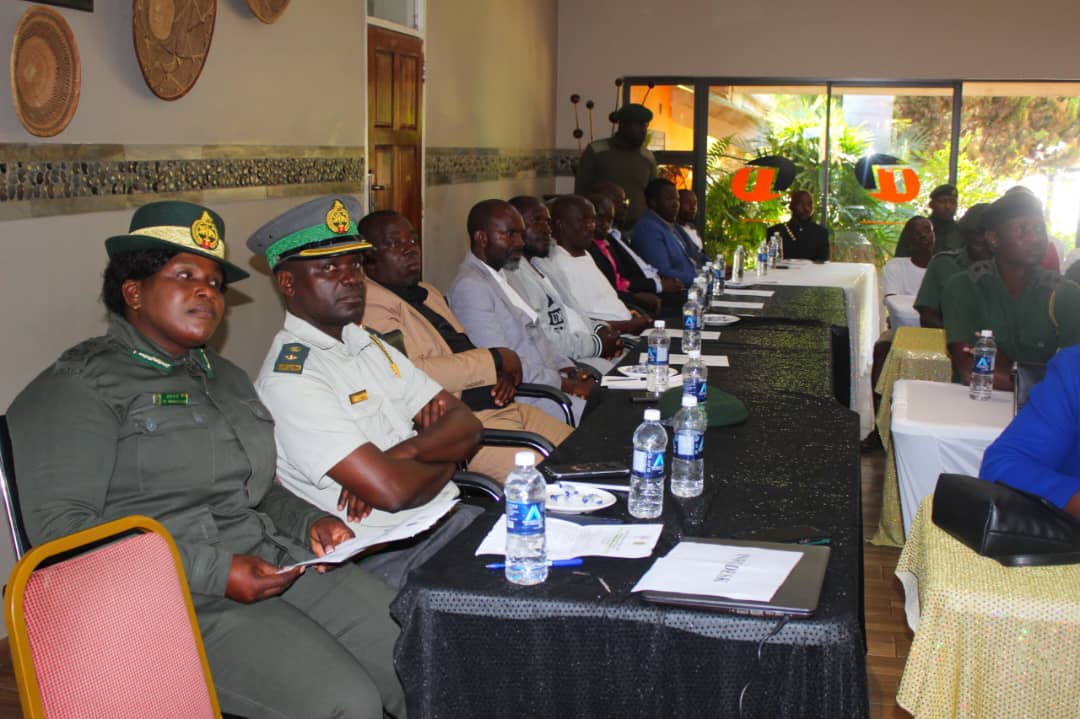
BINDURA- At Twin Lodge on 26 May 2026, a workshop convened by the Pathways to Reintegration Foundation (PAREF), under the auspices of the Zimbabwe Prisons and Correctional Service, did something few policy gatherings dare to do. It stripped away institutional comfort and confronted the nation with a question that does not yield to polite avoidance: When the prison gate opens, will we receive them?
The gathering drew an unusually broad coalition—traditional leaders, academics, clergy, media practitioners, captains of industry, government officials, and students. It was not simply a meeting of stakeholders. It was a convergence of influence, conscience, and lived experience, assembled around a problem Zimbabwe has long acknowledged but rarely faced with such clarity.
PAREF itself was not introduced as another programme seeking implementation. It was framed, deliberately, as a promise. A promise to strengthen rehabilitation, expand skills development, and restore pathways for those transitioning from incarceration back into society. Established by the Zimbabwe Prisons and Correctional Service, the initiative seeks to confront the enduring barriers to reintegration—stigma, limited resources, and policy fragmentation.
Its approach is both practical and ambitious: vocational training, education, mental health support, job placement, and the development of community-based correctional centres. In essence, it is an attempt to build a bridge where, for too long, there has only been a gap.
But promises—however well articulated—collapse under the weight of societal indifference.
At the centre of this conversation lies a moment so ordinary it is often ignored. The uniform comes off. The sentence ends. A human being walks out. No longer an inmate. No longer a file. Just a person returning.
That is where reintegration begins.
And that is where society most often fails.
Zimbabwe, like many nations, has developed systems that are efficient at sending people away. Far less thought has been given to bringing them back. Individuals are released into communities that remember their worst decisions but resist acknowledging their capacity for change. We demand rehabilitation within prison walls, yet deny opportunity beyond them. We speak fluently about correction, but act decisively in exclusion.
The result is a paradox: a freedom that feels heavier than confinement.
The gate opens—but acceptance does not. A man returns home to familiar roads that no longer recognise him. A child observes from a distance, uncertain whether the figure before them is a father restored or a stranger shaped by absence. This is punishment without bars—quiet, persistent, and profoundly damaging.
What distinguished the Bindura workshop was its refusal to dilute responsibility.
Reintegration, it made clear, is not the burden of one institution.
The Prisons and Correctional Service must prepare individuals not only for release, but for return. The Judiciary must create space for restoration alongside punishment. Law enforcement must be able to recognise transformation where it exists. The Church must embody the forgiveness it proclaims. Traditional leaders must re-anchor identity and belonging. The private sector must move beyond risk aversion and create opportunity. And the community—the ultimate gatekeeper—must choose whether to include or exclude.
Because the consequences are not theoretical.
Across Zimbabwe, there are empty spaces at family tables—not because they cannot be filled, but because return has been quietly resisted. There are mothers carrying grief without language. There are men and women waking each day, attempting to rebuild lives in environments that measure them solely against their past.
PAREF will not be judged by the success of a single workshop in Bindura. Its true measure will emerge in quieter, more decisive moments: when trust is extended where suspicion once prevailed; when opportunity replaces hesitation; when belonging is restored without qualification.
That is when reintegration ceases to be rhetoric and becomes reality.
The question raised at Twin Lodge does not end with the closing session. It travels—with unsettling persistence—into homes, boardrooms, churches, and corridors of power: When they come back, will we receive them?
Because if the answer is no, then Zimbabwe must confront a difficult truth.
Prison does not end at the gate.
It extends into communities.
It settles into attitudes.
It hardens in silence.
It becomes a sentence society continues to enforce long after the courts have spoken.
And in that extension of punishment, something deeper is revealed: the failure to reintegrate is not a failure of those who return, but of those who refuse to receive.
A nation that cannot reopen its doors cannot fully claim freedom.
A society that withholds belonging reshapes justice into exclusion.
In the end, the legacy of the Pathways to Reintegration Foundation will not be defined by frameworks or declarations, but by a collective decision—whether Zimbabwe is willing to replace memory with mercy, suspicion with trust, and distance with dignity.
Because when they come back, and we still turn them away—
it is not they who remain imprisoned.
It is us.