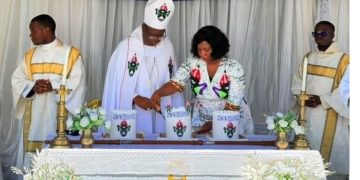
The Anglican Diocese of Manicaland celebrated 45 years of existence, and the Church challenged to deliver tangible solutions to the nation’s social and economic troubles.
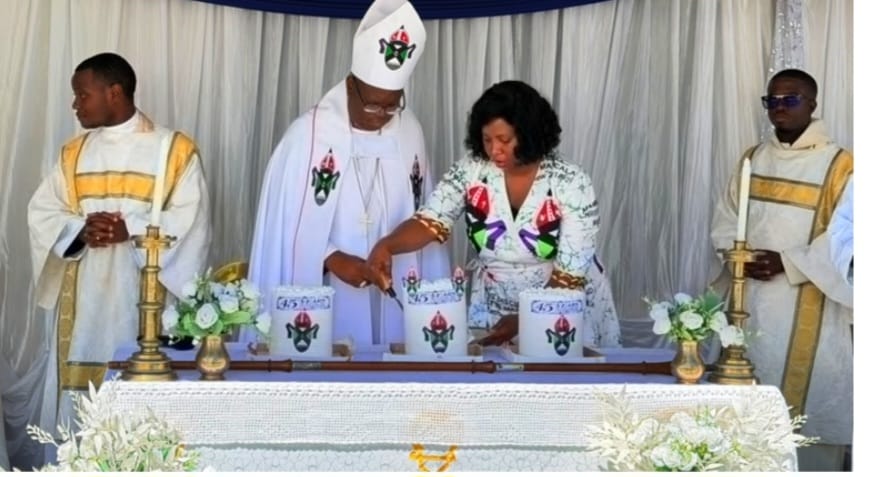
Bishop Reverend Eric Ruwona and the Diocese Mothers union president, Mrs Eunice Ruwona led the procession followed by cake cutting.
The Anniversary gave the diocese a chance to look back at its development and its impact on communities throughout Manicaland, especially in the areas of education, healthcare and evangelism.
The church has set up many schools and institutions that have played a role in improving education and health services in the province.
A number of its schools are still achieving impressive results in the Zimbabwe School Examinations Council (Zimsec) Ordinary and Advanced Level exams.
Diocesan leader, Lord Bishop Reverend Eric Ruwona, said the church must stop blaming others and become a driving force in providing practical answers to the social and economic problems facing local communities.
Speaking at St Bartholomew Cathedral in Rusape during the Anniversary proceedings, Bishop Ruwona, urged the clergy and laity, not to stand on the sidelines while communities struggle with unemployment and drug and substance abuse.
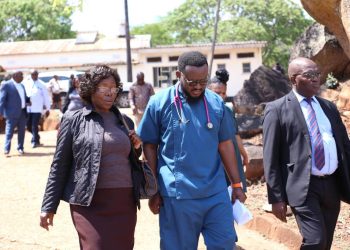
Diocesan secretary, Dr Edmund Samutereko and Diocese Mothers union president, Mrs Eunice Ruwona also attended the event.
“My call to the church is simple – as a church we cannot blame anyone. We cannot just stand and blame others. The church’s calling is to transform our nation,” said Bishop Ruwona, noting that early missionaries did not complain about the absence of infrastructure, but actively constructed schools, clinics, and hospitals in rural areas.
“In a similar manner we cannot go around and say as a church there are no jobs, the youths are into drugs. No, we should prescribe solutions, not expect Government to go it alone,” he said.
Bishop Ruwona said the diocese fully supports Vision 2030, and the Village Business Units concept, outlining plans to establish SBUs and VBUs business units across schools and congregations, transforming churches into hubs for community development.
“Our vision cannot be separated from the vision of our nation, and our vision cannot be separated from the sustainable development goals. We cannot continue to tell people to expect to enjoy in heaven, yet the Lord’s Prayer says thy will be done on earth as it is in heaven,” he said.
The diocese, which has established more than 100 schools, including several managed by rural district councils, seeks to turn congregations into centres of transformation, and expand its reach beyond traditional schooling and medical services.
Bishop Ruwona explained that given the current resource constraints and national shortfall of 3 000 schools, their immediate focus will be on increasing learners’ enrolment, while building new facilities.
“Every new community in Zimbabwe must have a school, a church and business unit so that we thrive as a nation,” he said.
Describing the diocese’s 45-year history as “nothing less than a miracle,” Bishop Ruwona said the church has weathered many storms to become a leading light within Zimbabwe.
Source: Manica Post