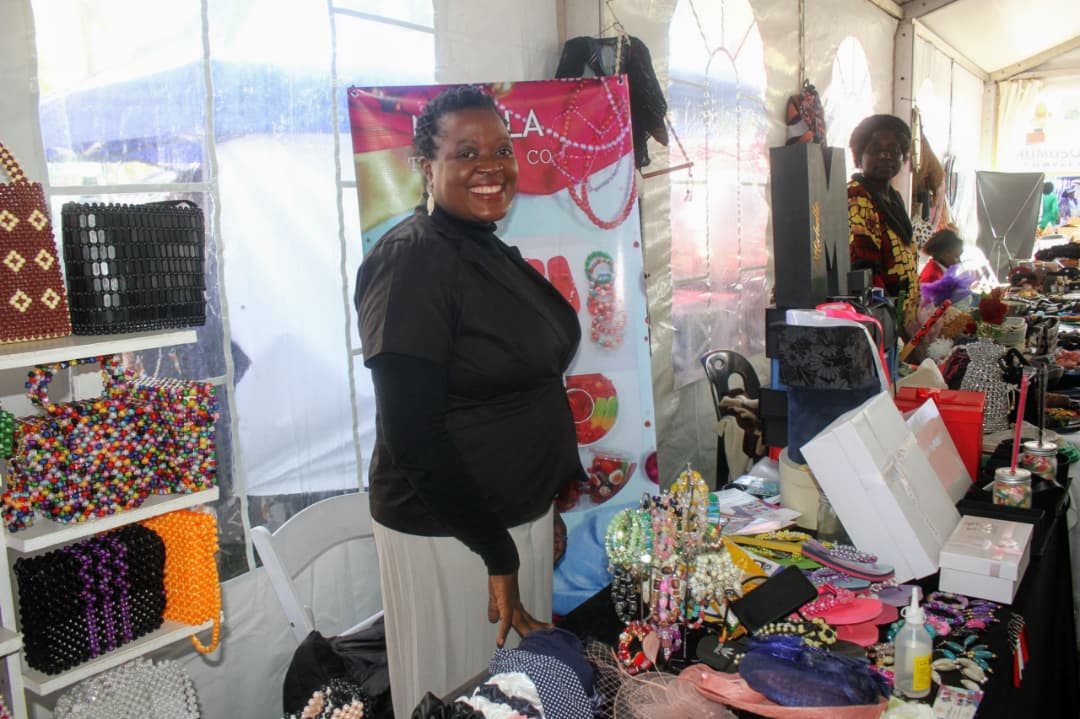
His Excellency President Emmerson Mnangagwa on 17 July 2026 at Harare International Conference Centre (HICC) officially launched the inaugural National Small and Medium Enterprises (SMEs) and Cooperatives Indaba, commending the Ministry of Women Affairs, Community, Small and Medium Enterprises Development for convening the gathering and urging small businesses to move beyond production into value addition and formal markets.
Addressing stakeholders at the Indaba, the President said the dialogue was part of the country’s “collective quest to realise sustainable development” and reaffirmed that MSMEs remain central to Vision 2030.
“My administration recognizes the role SMEs play. Entrepreneurship, innovation and economic growth remain essential in Vision 2030. Let us continue to build our motherland, Zimbabwe,” President Mnangagwa said.
He described the sector as a “pillar, core and central” to the economy, noting that it provides employment to millions of Zimbabweans.
The President said MSMEs are evolving and sustaining livelihoods while ensuring continuity in the supply of goods and services. He challenged the sector to “shift focus to enter markets through niche products” instead of competing only on volume.
Government, he added, “stands firm and ready to support enterprises in agriculture that deal with value addition, processing, packaging and marketing of agricultural products,” stressing that rural communities “must not be mere producers.”
Turning to mining, President Mnangagwa noted that small-scale miners account for about 65% of national gold output. He urged them to move from “mere extraction” to value addition by establishing foundries, and to “strictly adhere to occupational standards and health laws and policies.”
On financing, he announced the rollout of the National Industrial Development Fund (IDF) and other innovations aimed at achieving financial inclusion.
The President also called on entrepreneurs to look beyond local markets, saying government was investing in infrastructure to facilitate national trade.
“Modernisation of infrastructure is ongoing to improve connectivity and reduce costs,” he said, citing markets in Mbare Musika, Bulawayo, Masvingo, Chivhu and Gweru as examples of conducive spaces being developed.
He further directed local authorities to allocate land to enterprises and urged higher and tertiary institutions to collaborate with MSMEs on skills and innovation.
Formalization, the President said, “remains critical,” and announced measures including the “slashing of license burdens” to encourage businesses to register. “I urge entrepreneurs to embrace formalization to build Zimbabwe,” he said. “From micro, to small until large, with hard and honest work.”
President Mnangagwa concluded by reaffirming government’s assurance to create an enabling ecosystem that supports enterprise growth, investment and unlocks opportunities for all Zimbabweans.
He also announced Presidential Awards to recognize resilience, hard work, excellence and innovation in the sector.
“It is our responsibility to build our nation,” he said.
Meanwhile, Minister of Women Affairs, Community, Small and Medium Enterprises Development Senator Monica Mutsvangwa described the event as a historic inaugural and a testament to the unwavering commitment of the Second Republic to empower SMEs
She said Zimbabwe’s economic transformation cannot be complete without SMEs, citing their role in generation of income, creation of employment, and contribution to GDP, and noted that tobacco farmers and small-scale miners are MSMEs.
Senator Mutsvangwa emphasized the need for transforming local raw materials into finished products and reaffirmed government’s commitment to building a conducive ecosystem that allows them to thrive.
She added that “The awards and graduation are a celebration of innovation and determination, and a testament that with support and strategic policies, SMEs are capable of bringing impact to our nation.No one should be left behind, including women and Persons with Disabilities (PWDs),”she added
The two-day indaba brought together government officials,private sector, development partners and cooperatives to map strategies for growing the MSME sector.