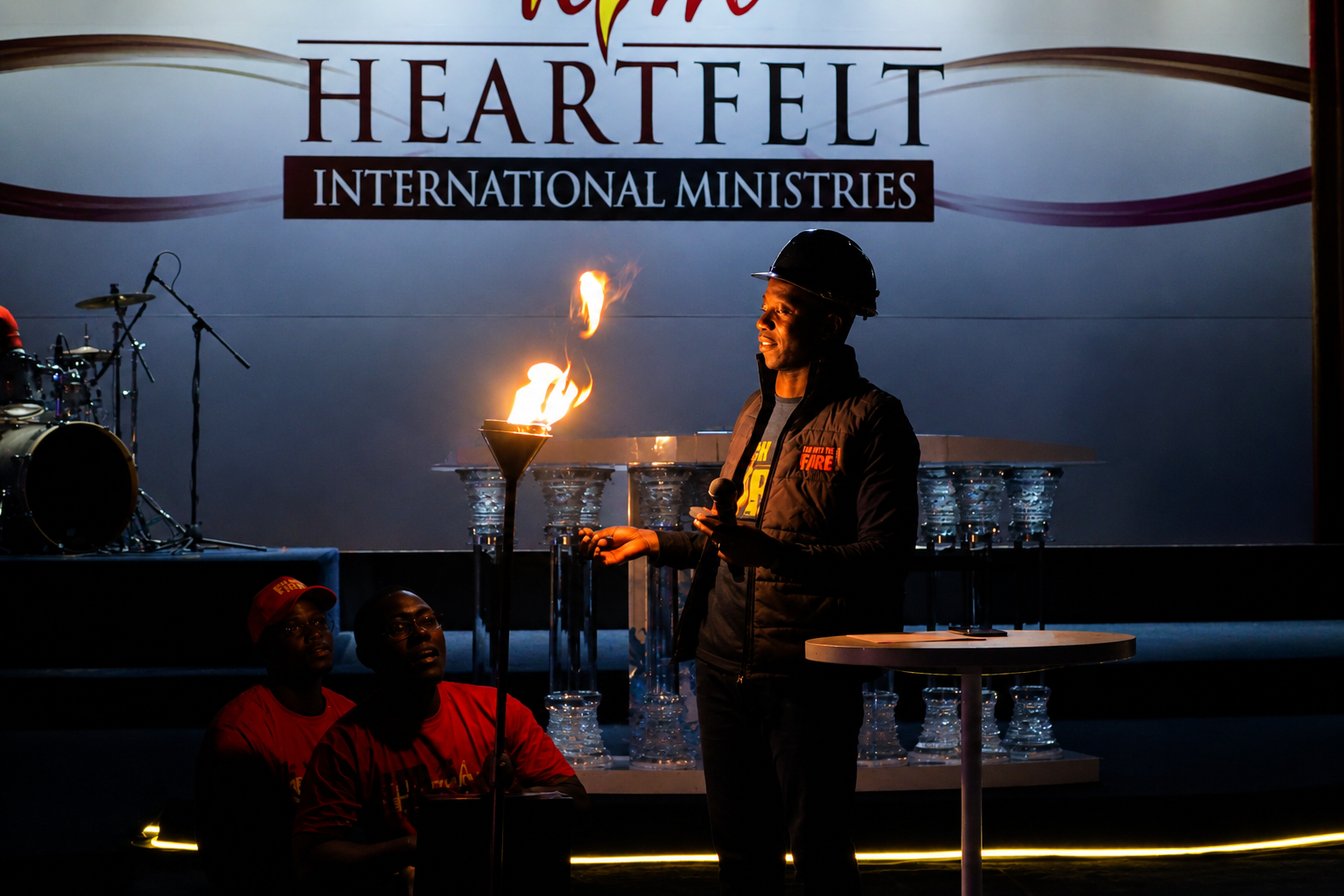
On 5 June 2021, Prophet Temitope Balogun Joshua, founder of The Synagogue, Church of All Nations (SCOAN), passed away in Lagos, Nigeria. Known to millions simply as “T.B. Joshua,” his life bridged continents, denominations, and cultures.
Five years later, the question remains: What was his global impact? Zimgospel Masters magazine traces his influence across ministry, media, philanthropy, and international relations without exaggeration, but with the facts that shaped his legacy.
Born on 12 June 1963 in Arigidi-Akoko, Ondo State, Nigeria, T.B. Joshua began SCOAN in 1987 in a small, humble setting. By the 2000s, it had become one of Africa’s most visited Christian destinations.
The Nigerian Immigration Service reported that six out of every ten foreign travelers to Nigeria visited SCOAN. The church hosted visitors from over 100 nations, including the United Kingdom, United States of America, South Africa, Ghana, Greece, South Korea, and Brazil.
In 2006, Prophet T.B. Joshua launched Emmanuel TV, a 24/7 free-to-air satellite channel. At its peak, it was available in more than 180 countries and became one of Africa’s most watched Christian networks.
Prophet T.B. Joshua held meetings in Mexico, Colombia, Dominican Republic, Peru, Paraguay, South Korea, Singapore, Indonesia, Australia, and Israel. The 2016 “Nazareth Meeting” in Israel drew thousands of international pilgrims and received coverage from Israeli and global media.
He was best known for a ministry that emphasized healing, deliverance, and prophecy. While contested in some theological circles, the model shaped global charismatic practice.
In terms of how his ministry impacted the works of other gospel ministers, hundreds of pastors worldwide cite SCOAN as a point of impartation. Many started branches or “Emmanuel TV Partners” groups in their own nations, creating a decentralized network of ministries patterned after SCOAN.
The late T.B Joshua had been using the humanitarian-faith model. He paired spiritual ministry with material support. International visitors often received food, lodging, and travel help, framing healing ministry within a broader ethic of compassion. Beyond the pulpit, Joshua’s philanthropy reached across borders with some of his disaster relief sent to Haiti after the 2010 earthquake, Ecuador after the 2016 earthquake, and multiple Nigerian flood victims.
The late faith icon was so passionate to see the young underprivileged people advancing with education through funded university scholarships for students from Nigeria, Ghana, South Africa, and India.
In terms of community development, Prophet Joshua sponsored boreholes, electricity transformers, and road repairs in communities across Nigeria. During COVID-19, SCOAN distributed food to over 100,000 households.
However, no global figure is without debate. Joshua faced criticism over prophetic claims, the 2014 SCOAN guest house collapse that killed 116 people, and questions about healing claims. He also had periods of tension with the Christian Association of Nigeria and Pentecostal Fellowship of Nigeria.
Yet, even critics acknowledge two things: the scale of his humanitarian work and the loyalty of his global following. After his death, the 2024 BBC documentary, Disciples, reopened debates, while SCOAN leadership under Pastor Evelyn Joshua maintained the ministry’s operations and global partnerships.
The church continues in Lagos under Pastor Evelyn Joshua, Emmanuel TV still broadcasts, and international branches remain active.The “SCOAN generation” Pastors in Europe, Asia, and the Americas who trace their ministry style to Joshua continue to plant churches.
Prophet T.B. Joshua’s life defies a single label. To supporters, he was “God’s general,” a prophet whose compassion matched his charisma. To skeptics, he was a complex, controversial figure whose methods demanded scrutiny.
What is measurable, five years after his promotion to glory, is this: he took a local church in Ikotun-Egbe and gave it a global pulpit, he turned television into an altar for nations, he made Lagos a stop for seekers from Seoul to São Paulo and he tied spiritual ministry to food parcels, scholarships, and disaster relief.
Whether one agrees with his theology or not, his impact on 21st-century charismatic Christianity, African media evangelism, and faith-based humanitarianism is part of the record. As SCOAN marks this anniversary, the conversation about T.B. Joshua moves from the man to the movement he set in motion.